CPG Data Harmonization: University of Michigan Case Study
|
By Phil Willis
CPG Data Harmonization: University of Michigan Case Study
10:56
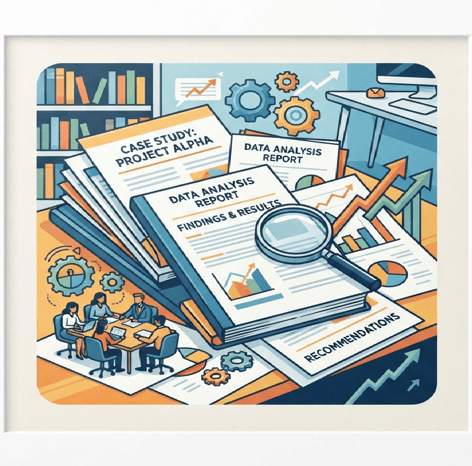
New research from a University of Michigan project team reveals exactly why clean retail data remains one of the most valuable assets for CPG organizations. Exploring critical workflows across data harmonization, predictive forecasting, data visualization, and AI readiness, this case study highlights how structural data simplification directly unlocks faster, more accurate business decisions.
Key Findings from the University of Michigan Project
The Retail Data Challenge
Why Data Simplification Matters
The Growing Role of Predictive Forecasting
Visualization Turns Data Into Decisions
Preparing for the AI Era
Put the University of Michigan Findings to Work
About the Research
Retail Velocity partnered with the University of Michigan's Atlas Consulting Group on a consulting engagement focused on retail data harmonization, forecasting, analytics, and competitive benchmarking. The project explored how CPG companies can better prepare for the next generation of analytics and AI-driven decision making.
Their findings reinforce a message that is becoming increasingly important throughout the CPG industry: sophisticated analytics and AI initiatives are only as effective as the data that powers them.
Key Findings from the University of Michigan Project
The University of Michigan Atlas Consulting Group identified several themes that have become increasingly important across the CPG industry:
- Retail data harmonization can reduce datasets by more than 90% while preserving business-critical information.
- The team highlighted an example where 12.5 million rows of retailer data were condensed to approximately 500,000 rows through harmonization and consolidation.
- Reducing data complexity can improve Excel performance by more than 70%, helping analysts spend less time waiting on spreadsheets and more time generating insights.
- Standardized retail data creates a stronger foundation for forecasting, visualization, business intelligence, and emerging AI technologies.
The Retail Data Challenge
Retailers provide information in many different formats, structures, calendars, and reporting methodologies. Manufacturers often receive large volumes of data that require significant preparation before analysis can begin.
One area examined by the University of Michigan team was data harmonization, the process of transforming retailer-specific data into a standardized structure that can be analyzed consistently across customers, products, and channels. During the project, the team noted that standardized data improves readability, supports product-level analysis, enables geographic and store-level reporting, and creates a foundation for future analytical applications.
Without this preparation, business teams frequently spend more time managing data than using it.
Why Data Simplification Matters
The research also highlighted a challenge many analysts have experienced firsthand: large datasets can quickly become difficult to manage.
One example presented during the project showed how retail data harmonization can dramatically reduce complexity. The team highlighted how the Retail Velocity architecture took a chaotic dataset containing approximately 12.5 million rows of raw retailer data and seamlessly condensed it to roughly 500,000 harmonized rows, eliminating more than 90% of the rows while preserving the information necessary for analysis and reporting.
The benefits extend beyond storage savings. The project noted that reductions of this magnitude can allow Excel workbooks to process more than 70% faster, improving usability for business analysts and category managers working with large retail datasets.
For CPG organizations managing data across multiple retailers, products, and geographies, reducing data complexity has implications far beyond reporting. Data quality influences forecasting accuracy, dashboard performance, collaboration, and ultimately the speed of business decision making.
The Growing Role of Predictive Forecasting
One of the most interesting components of the project focused on predictive forecasting methodologies.
The University of Michigan team evaluated several forecasting approaches, including ARIMA (AutoRegressive Integrated Moving Average) statistical modeling, Power BI forecasting capabilities, and Excel forecasting techniques such as FORECAST.ETS. Their work explored how historical retail sales and inventory data could be used to anticipate future inventory requirements, replenishment needs, and sales performance.
The project demonstrated that forecasting is no longer limited to large data science teams. Modern business tools increasingly provide forecasting capabilities within familiar platforms such as Excel and Power BI, allowing organizations to explore future scenarios using data they already possess.
However, the researchers repeatedly emphasized an important reality: forecasting quality depends on data quality. Poorly structured, inconsistent, or incomplete retail data limits the value of even the most advanced forecasting model.
Visualization Turns Data Into Decisions
Data preparation and forecasting create value only when business users can understand and act on the results.
The project's visualization work examined how business intelligence tools can transform harmonized retail data into meaningful insights. The team highlighted the importance of drill-down capabilities, trend analysis, inventory visibility, and exception reporting to help organizations understand product performance and identify business opportunities.
This reflects a broader trend across the CPG industry. Successful analytics programs rarely focus solely on collecting data. Instead, they prioritize delivering information in ways that support faster and more confident decision making.
Preparing for the AI Era
Perhaps the most relevant takeaway for today's business leaders is the connection between data quality and artificial intelligence.
Organizations are rapidly adopting tools such as Microsoft Copilot, ChatGPT, Google Gemini, Claude, and other intelligent assistants. These technologies promise faster analysis, natural language interaction, and broader access to insights.
But AI cannot compensate for inconsistent or poorly structured data.
The University of Michigan project demonstrated that robust data harmonization acts as the ultimate accelerator for AI readiness. By converting massive, fragmented retail files into highly compressed, analytics-ready datasets, organizations can dramatically improve processing performance while ensuring intelligent assistants deliver reliable, hallucination-free business insights.
Key Takeaways for CPG Organizations
The University of Michigan consulting project reinforced several themes that are increasingly relevant throughout the CPG industry:
- Data harmonization remains a critical first step for analytics success.
- Forecasting tools are becoming more accessible to business users.
- Visualization is essential for turning data into actionable insights.
- AI initiatives depend on clean and trusted underlying data.
- Organizations that reduce data complexity are often better positioned to improve speed, efficiency, and decision making.
As AI continues to transform how businesses work with information, the lesson is clear: the future of analytics is not simply about better algorithms. It begins with better data.
Put the University of Michigan Findings to Work
The Atlas Consulting Group research confirms that advanced forecasting and AI success depend entirely on your underlying data quality. You do not need a massive data science team to achieve a 90% reduction in data complexity or a 70% boost in analytical speed-you just need the right data engine.
Ready to transform your raw retail data into an AI-ready foundation?
Discover how the VELOCITY® Platform automates harmonization across all retail partners to accelerate your business decision-making. https://www.retailvelocity.com/contact-us
About the Research:
The insights discussed in this article originated from a consulting engagement performed by students from the University of Michigan Atlas Consulting Group working with Retail Velocity. The project examined retail data harmonization, predictive forecasting methodologies, business intelligence visualization, and competitive market trends. The findings referenced in this article represent observations and recommendations developed during the engagement and are intended to contribute to broader industry discussions around analytics, forecasting, and AI readiness.
Frequently Asked Questions:
Why is clean retail data required before implementing AI analytics in CPG companies?
Clean retail data serves as the mandatory canonical foundation for downstream AI and machine learning tools. Artificial intelligence cannot automatically correct or align inconsistent reporting formats, mismatched calendars, or messy product hierarchies across multiple retailers. Providing harmonized, high-purity retail data to tools like Microsoft Copilot or ChatGPT guarantees accurate, actionable business insights instead of skewed or hallucinated metrics.
What is retail data harmonization for Consumer Packaged Goods (CPG) brands?
Retail data harmonization is the automatic extraction, transformation, and normalization of diverse retailer-specific point-of-sale (POS) and inventory feeds into a singular standardized architecture. By aligning disparate units of measurement, naming structures, and operational calendars, harmonization gives cross-functional teams a single, synchronized demand repository to analyze product performance across all geographic channels.
How does poor retail data quality impact predictive sales forecasting accuracy?
Poor data quality introduces statistical noise, structural gaps, and anomalies that inherently distort predictive demand algorithms. Advanced forecasting models, such as ARIMA statistical workflows or Power BI predictive features, rely on uniform historical data signals. If the underlying point-of-sale information is fragmented or poorly structured, the resulting replenishment and inventory projections will be fundamentally flawed.
How can CPG manufacturers reduce data complexity across multiple retail partners?
CPG manufacturers can eliminate data complexity by deploying automated data harmonization engines like the VELOCITY® Platform. Consolidating unstructured spreadsheets into a centralized database vastly compresses overall data volume while preserving granular store-and-SKU business utility. This data purification accelerates dashboard load times, improves predictive analytical speed, and slashes expensive data storage requirements.