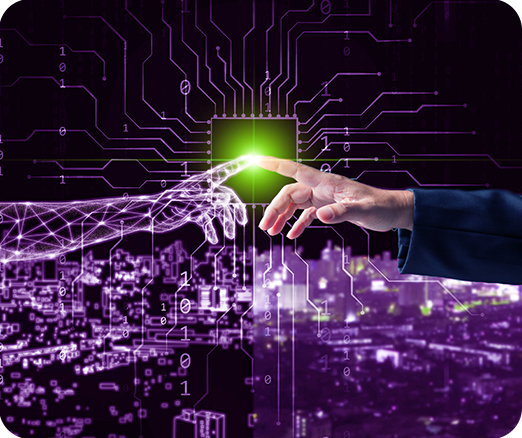
Digital Twins in CPG: What They Are and Why They Matter
|
By Retail Velocity
Table of Contents
- What Is a Digital Twin?
- How Do Digital Twins Work?
- Types of Digital Twins
- Pros and Cons of Digital Twins
- Why Digital Twins Matter for CPG Companies
- The Future of Digital Twins in CPG
- Conclusion
In an era where consumer expectations change overnight and supply chains are more interconnected—and more fragile—than ever, digital twins have emerged as one of the most transformative technologies in business.
While the concept may sound futuristic, digital twins are rapidly becoming essential tools for consumer packaged goods (CPG) manufacturers and retailers looking to operate smarter, faster, and more efficiently.
This article breaks down what digital twins are, how they work, their pros and cons, why they matter specifically for CPG brands, and where the technology is headed next.
What Is a Digital Twin?
A digital twin is a continuously updated virtual representation of a real-world object, system, or process. It mirrors the physical world using live data, analytics, and modeling, allowing users to monitor performance, run simulations, make predictions, and optimize operations.
-
Monitor what’s happening right now (e.g., machine performance, inventory flows, capacity).
-
Simulate what could happen under different scenarios (e.g., What if demand spikes? What if a truck is delayed?).
-
Predict failures, bottlenecks, or disruptions.
-
Optimize operations based on real-time conditions.
If you’ve ever used Google Maps to check traffic conditions, you’ve used a type of digital twin. Instead of roads and cars, businesses create digital twins of factories, warehouses, manufacturing lines, supply chains, retail stores—even entire enterprises.
In other words: A digital twin is the living, breathing digital brain behind a physical operation.
How Do Digital Twins Work?
Digital twins combine three core components:
1. Physical Entity (i.e., object or process)
This could be:
-
A production line
-
A warehouse or distribution center
-
A supply chain network
-
Inventory flow or a human process like order fulfillment
-
A machine
-
A retail shelf or store layout
2. Digital Model
The virtual version mirrors the structure, behavior, and relationships of the physical entity. Modeling techniques include:
-
Process modeling (e.g., order-to-cash, demand planning)
-
3D spatial representation (e.g., layout of a plant)
-
Mathematical/AI models (e.g., demand forecasting algorithms)
3. Data + Connectivity
Real-time and historical data keep the digital model accurate. Data sources may include:
-
IoT sensors
-
ERP, WMS (Warehouse Management System), TMS (Transportation Management System, and point-of-sale (POS)/transactional data
-
Forecasting and planning systems
-
Telemetry from machines or vehicles
-
External signals (weather, promotions, social sentiment)
*As data flows in, the digital twin updates continuously—reflecting the real world and enabling "what-if" simulations based on alternative scenarios.
Types of Digital Twins
Digital twins can be built at different levels of scope depending on the business problem being solved.
-
Component digital twins model individual machine parts or components, often used to monitor performance in real time, detect anomalies, or predict maintenance needs.
-
Asset digital twins represent an entire machine or piece of equipment, offering insights into how various components interact and perform collectively, while also helping to identify efficiency or reliability issues.
-
System digital twins simulate larger operational environments such as a production line, warehouse, or distribution center to improve capacity planning, throughput, and operational efficiency.
-
Process digital twins replicate end-to-end business workflows—like order-to-cash, demand planning, or retail replenishment—allowing teams to run what-if scenarios that identify bottlenecks and enhance cross-functional decision-making.
-
Enterprise or supply chain digital twins provide an end-to-end view of the business by connecting demand, inventory, logistics, and production data, supporting advanced forecasting, scenario planning, and supply chain optimization.
Pros and Cons of Digital Twins
Pros
1. Better Decision-Making
Digital twins give CPG leaders a single source of truth, enabling data-driven decisions based on real-time insights rather than static reports or gut instinct.
2. Scenario Planning at High Speed
Sales, marketing, and supply chain teams can simulate:
-
Consumer demand surges
-
Supply chain disruptions
-
Inventory reallocation
-
Logistics constraints
-
New production schedules
*This can be done without touching the physical operation.
3. Predictive Capabilities
Using historical patterns and real-time inputs, digital twins can predict:
-
Machine failures
-
Stockouts
-
Inventory imbalances / inventory distortion
-
Transportation delays
-
Impact of retailer promotions and marketing campaigns
*This leads to fewer surprises and more proactive planning.
4. Operational Efficiency
CPG companies and consumer brands can use digital twins to optimize:
-
Routing and transportation
-
Factory throughput
-
Store layouts, merchandising strategies, retail execution, and trade promotions
-
Personalized shopping experiences
-
Inventory placement, category/shelf performance, and retailer replenishment
*Small percentage improvements compound quickly across large CPG networks.
5. Reduced Costs and Risk
By simulating changes before implementing them, CPG companies avoid costly mistakes such as misallocating inventory or overloading a warehouse.
Cons
1. Data Quality Challenges
A digital twin is only as good as the data feeding it. Incomplete, delayed, or inaccurate data can limit its value.
2. Complexity
Creating a digital twin of a supply chain or enterprise requires:
-
IT integrations
-
Cross-functional alignment
-
Deep process mapping
-
Change management
*It can be a big lift for organizations without strong data infrastructure.
3. Cost
Building and maintaining digital twins can require significant investment, though cloud-based offerings are lowering the barrier.
4. Skills Gap
Organizations need talent proficient in data engineering, analytics, and modeling—and that’s not always easy to find.
*Despite these challenges, most CPG leaders see digital twins as a long-term competitiveness play rather than a short-term experimental technology.
Why Digital Twins Matter for CPG Companies
Few industries stand to benefit as much from digital twins as consumer packaged goods. That’s because CPG companies operate in environments with enormous complexity: global supply chains, seasonal demand swings, retailer-specific constraints, promotional volatility, shelf-space battles, and rising fulfillment expectations.
Here’s how digital twins directly support CPG operations:
1. Improved Demand Forecasting
Digital twins blend:
-
POS data
-
Weather patterns
-
Promotional calendars
-
Inventory levels
-
Channel behavior
*This enables brands to generate more accurate short- and long-term forecasts and reduce both out-of-stocks and excess inventory.
2. End-to-End Supply Chain Visibility
Instead of siloed data and dashboards, supply chain teams get a single model showing:
-
Production status
-
Warehouse capacity
-
In-transit goods
-
Retailer-level inventory
-
Transportation constraints
-
Service-level risks
*This makes it easier to detect disruptions early and react quickly.
3. Smarter Production and Scheduling
Digital twins can simulate:
-
What happens if a production line goes down
-
How to sequence production for least downtime
-
When to schedule maintenance
-
Impact of ingredient shortages
-
Throughput under different staffing levels
*This leads to better OEE (Overall Equipment Effectiveness), fewer delays, and more efficient plants.
4. Retail Execution Optimization
Digital twins model:
-
Shelf performance
-
Product category flows
-
Trade promotion impact
-
In-store traffic patterns
*Brands can test planograms, product mixes, or price changes before launching them in the real world.
5. Cost Reduction & Sustainability
By optimizing transportation routes, pallet configurations, production runs, and energy usage, digital twins help CPGs reduce:
-
Fuel consumption
-
Packaging waste
-
Excess handling
-
CO₂ footprint
-
Overtime labor
*For companies with sustainability commitments, this is a major unlock.
The Future of Digital Twins in CPG
Digital twins are evolving rapidly, and the next era is even more transformative. Here’s what’s coming for consumer brands and retailers:
1. AI-Native Twins
Generative AI will:
-
Interpret what’s happening in the twin
-
Generate recommendations automatically
-
Simulate scenarios in natural language (“show me the impact of a 10% demand lift for Walmart next week”)
*Expect digital twins to become advisors—not just dashboards.
2. Twin-to-Twin Interactions
Digital twins for manufacturing, logistics, demand planning, and finance will start “talking” to one another.
Example: A demand spike in the demand twin automatically triggers simulations in production, transportation, and cost models.
3. Retailer-Supplier Shared Twins
Retailers and CPG suppliers will increasingly collaborate on joint models, improving:
-
Promotion execution
-
Retail execution
-
Supply scheduling / retail replenishment
-
Sales and demand forecast accuracy
*We’re at the early stages, but the value is enormous.
4. Store + Shopper Twin Integrations
Computer vision and sensors will enable real-time store twins that simulate:
-
Foot-traffic flow
-
Product interactions
-
Out-of-stocks
-
Planogram performance
*This becomes incredibly powerful for category management and merchandising.
5. Fully Autonomous Operations
As AI and digital twins mature, companies will move toward:
-
Self-optimizing supply chains
-
Automated production scheduling
-
Predictive replenishment
-
Autonomous transportation orchestration
*Human oversight won’t disappear—but decision-making will shift dramatically.
Conclusion
Digital twins are more than a buzzword—they’re a foundational capability that will define the next generation of operational excellence in CPG. By creating real-time virtual models of the physical business, companies gain unprecedented visibility, predictive power, and agility.
For CPG leaders facing supply volatility, rising consumer expectations, and increasing cost pressure, digital twins offer a path to operate with greater resilience and speed. And as AI-native twins emerge, their impact will only accelerate.